
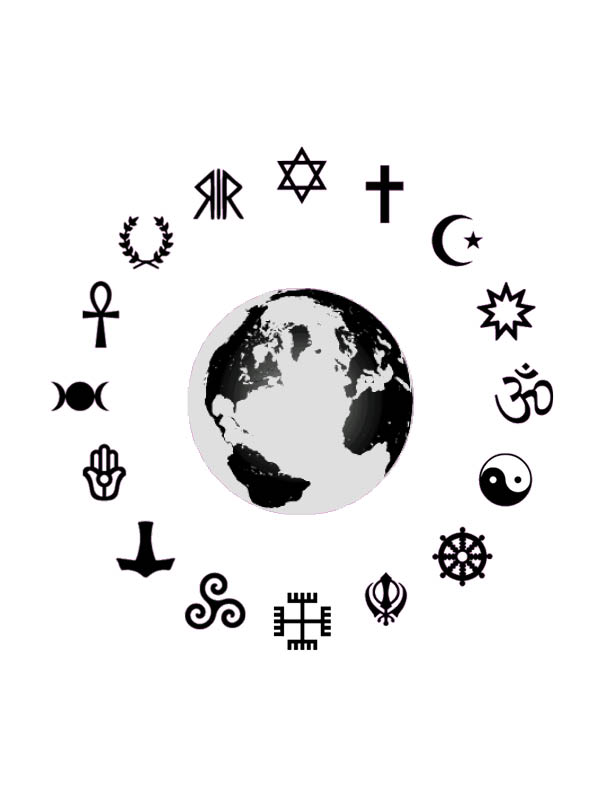
During this Pandemic crisis, humans have knowingly or unknowingly surrendered to God. With no cure and a lesser way to live a good life, they are now showing interest in the subject of theology. This essay will answer the problems of nature of God, its forms & definition, its belief in various religions, theology practice, and the relevance on present crises.
Concept of God in Theology
Theology studies the nature of God and beliefs in religious practice. It’s important to explore the nature of God in the diverse religious culture. It is helpful to understand the religions approach to problems. At the beginning of civilization, humans would generally address prayers to natural resources. The ancient tales and custom practices have revealed the interest of humans to the unexplored truths of nature. Our five major elements of Earth, water, fire, air, and ether are available in each being. Thus, the elements played a major role in life sustenance. This reason was enough to pray to the elements and cherish its features. In Greek culture, the ancient practice of praying the essential elements are well preserved as evidence in philosophy texts. The problems of finding God appear now and again to get the knowledge of unexplored and unidentified truth.
By getting closer to God, we could find the solution to problems of humanity. The religious study provides a pathway to explore God and know it with different perspectives. Having faith in God dominates the aspects of morality and ethics. People are ethical because they believe in the ultimate being. The ultimate being or God handles all the coordination of the Universe and world.
Quality of God
The quality of God is omnipotence(all-powerful), omnipresent(present everywhere), Omniscience(all-knowing), and omnificence(all creative source). These four Omni describe the quality of God which is far above from the reach of humans. Many religious platforms believed that one couldn’t measure God’s power. But one could realize it by the extent of naturalistic and mysterious happenings in life.
God signifies unity, eternity, and perfection. God is above space and time. It is never affected by the miseries and sorrows which are the biggest weakness of humanity. Humans study God and religions to reduce their suffering. They try to get deeper within self to explore the ultimate source of happiness. The conclusive revelation, realization, and resurrection of God identify with the quest of Humanity.
Concepts of different Religion and God
Nyaya theology affirms that the world is a product for which an agent or creator is God. They have also given the proof for the existence of God in their doctrine of inference. In brief, the doctrine reveals that wherever there is a cause, there is an effect. The world is existing for the hypothetical reasons of God behind its creations. Jainism, on the contrary, doesn’t believe in God. They rather believe in liberated souls. For them, the liberated soul is their hero. They meditate on the liberated souls to achieve peace and prosperity in life. Jainas believe in self-help. For every unpredictable event, they take their responsibility to come out of it. The other religion which doesn’t believe in God is Buddhism. It is a practice of hope and compassion. Buddha has shown the hope to come out of sufferings in human life. Buddhist believe in the theory of incarnation. The ultimate being takes the form of different religious teachers to show the right path. For Buddhists, God is eternal consciousness. It possesses infinite knowledge and perfect freedom from attachment.
In the Hindu religion, God is Brahman(the ultimate being). Hinduism has personified Brahman into many Male and female gods. This Polytheists belief ascertains various rituals for happiness and wellbeing. The major God of Hindu carries Trimurti qualities of Creator, Preserver, and Destroyer (i.e., Brahma, Vishnu, Mahesh). They are the unbiased distributor of the fruits of our actions. Judaism is a monotheistic religion. They believe that God does exist and there is no need to provide proof for that. For them, God is incorporeal. And like Hindus, they don’t have any male or female God. For the creation of complete being, there are three compulsory participants in Judaistic religion- mother, father, and God. Mother & father provide our physical body and God provides mind and soul.
In Islam, God is absolute, all-powerful, all-knowing, all-merciful, neither material nor spiritual. God is Allah. He is the ruler and his greatness has created the world and other beings. For the practitioners of Islam, Allah is the lifeline and everything belongs to the will of Allah. Christianity considers God as their father. He sacrificed his son for the well being of all. Jesus Christ, son of God, got crucified for protecting others. For Christians, God is the Holy Spirit which reveals itself for the betterment of the world. In both Islam and Christianity, God is creator, sustainer, and judge. The fundamental belief of Sikhs is that God doesn’t exist as an idea or concept but a real being. God is their Waheguru(wonderful Lord) or the supreme reality. They got to know about God through the teachings of Guru Nanak and other Gurus.
Conclusion
The brief insight of all the religions makes us aware that God is for everyone. It is a single formless body with multiple names. The attributes are mostly the same for all God. They are the creator, preserver, and lighthouse of all beings. Humans live a purposeful life due to the grace of God. All the coordination and harmony are possible in the world because there is one ultimate supervisor. Humans are relatively free and has lesser control in destiny. It’s the creative energy of God which directs man towards their purpose and actions. We, humans, are acting in the guidance and will of divine beings. Our life has only one purpose of merging to divine beings. Sri Aurobindo also believes that the development and progress of humans are to embrace divinity within. With all such concepts, it turns clear that God is an invaluable part of humanity. Religions preserved beliefs that are positively concerned with moral issues. Thus, the religions of humans are essential to keep connections with God so as to ease human problems.
Reference
Chatterjee S; Datta D. An Introduction to Indian Philosophy. 7th ed., New Delhi, Rupa Publications India Pvt. Ltd. 2007, 2018.


Drop your thoughts below!