
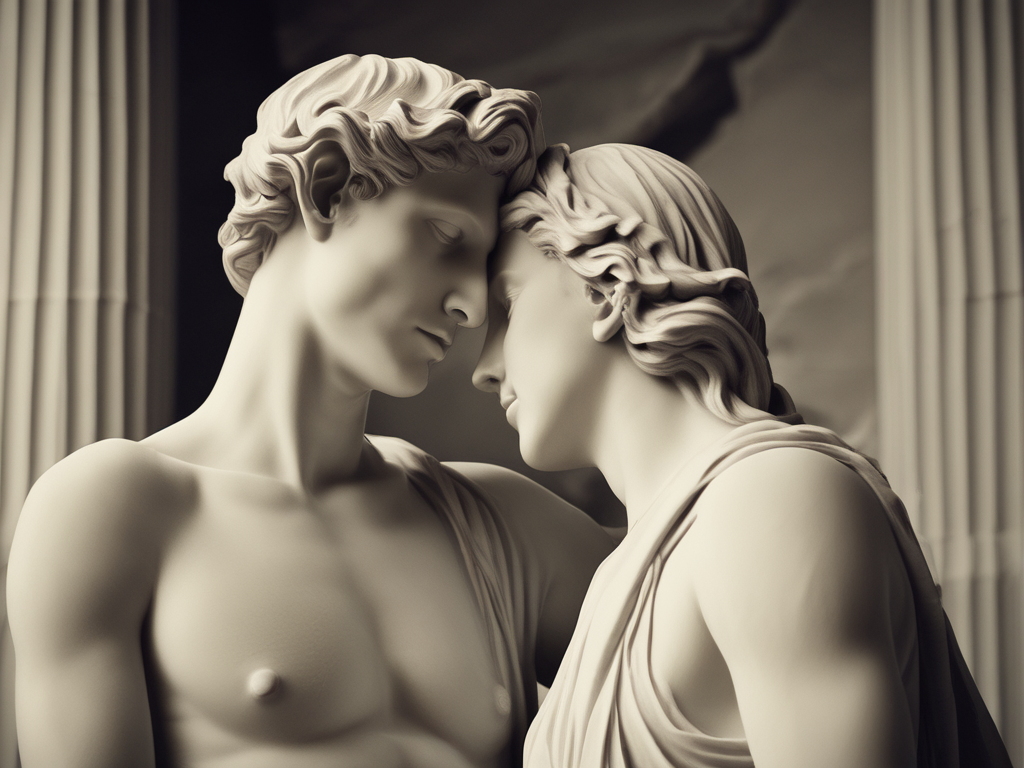
Plato’s “Symposium” is a philosophical text centered on the nature of love. It takes place at a party in ancient Greece and features speeches from various characters. The Symposium features speeches by notable individuals, including Phaedrus, Pausanias, Eryximachus, Agathon, Socrates, and Aristophanes, each providing unique insights that still resonate today. They talk about love inspiring bravery, the difference between physical and spiritual love, love’s role in everything on Earth, and how love embodies moral virtues. Socrates also discusses love in pursuit of beauty and wisdom, while Aristophanes describes love as the search for one’s other half. Overall, the dialogue runs into the various forms and impacts of love in human life, providing deep insights into the nature of love and relationships
Key Speeches and Themes:
Phaedrus: The Virtue of Bravery in Love
- Love inspires bravery and self-sacrifice.
- Lovers and beloveds are willing to die for each other.
- Stories of Alcestis, who died for her husband and was honored by the gods, and Achilles, exemplify this.
Pausanias: Common Love vs. Heavenly Love
- Differentiates between common love (physical attraction) and heavenly love (spiritual connection).
- Common love is more about physical desires and happens often between men and women.
- Heavenly love is about the soul and is considered noble and virtuous.
- Humans were split from their other halves due to excessive ambition; true love can help them return to their original form.
Eryximachus: Love in All Things
- Extends love beyond human relationships to include everything on Earth.
- Love exists in opposites and has a role in medicine.
- Physicians must distinguish between noble and disgraceful love to create harmony in the body.
Agathon: The Moral Character of Love
- Describes love as embodying courage, justice, moderation, and wisdom.
- Love possesses beauty and good things, and is never a cause of injustice.
- Love has control over pleasures and passions, showcasing the greatest moderation.
Socrates: Love as a Pursuit of Beauty and Wisdom
- Deconstructs Agathon’s speech, agreeing that love pursues beauty and good things.
- Recounts a dialogue with Diotima, who presents love as a spirit between beauty and ugliness, mortal and immortal, wisdom and ignorance.
- Love aims for immortality through creation, either physically or spiritually.
- The highest form of love appreciates the beauty of the soul over the body.
Aristophanes: Love as the Pursuit of Wholeness
- Describes love as the search for one’s other half.
- True love binds souls together, surpassing physical attraction.
Modern relevance of the concept of Love
When we describe love and explain it in words, its beauty multiplies. Many feel that the concept of love is missing in life. Despite having a partner, one is burdened by unending ambitions, and thus one is never able to reach the goal of loving relationships. To learn from love, one should see it as a guiding spirit and not the slave to use on need. One should seek its help to dissolve the common problems of life. Being in love should heighten your spirit and bring you towards the good life. So, knowing the Symposium and the dialogues on Love would make ourselves more confident in seeking the path of love and immerse in its glory.
Conclusion:
Plato’s “Symposium” provides a rich exploration of love, examining its different forms, purposes, and impacts on human life. It encourages us to see it not just as a romantic or physical feeling, but as a force encompassing bravery, virtue, harmony, and the quest for unity and immortality. From the bravery inspired by love to its role in achieving spiritual and physical wholeness, the dialogue offers an in-depth analysis into the nature of love and relationships.


Drop your thoughts below!