
- Tenth Day of Ashvin: Dussehra is celebrated on the tenth day of the Hindu month of Ashvin. This month is lunar, while the year is solar. It usually takes place between September and October. The festival represents the victory of Good over Evil.
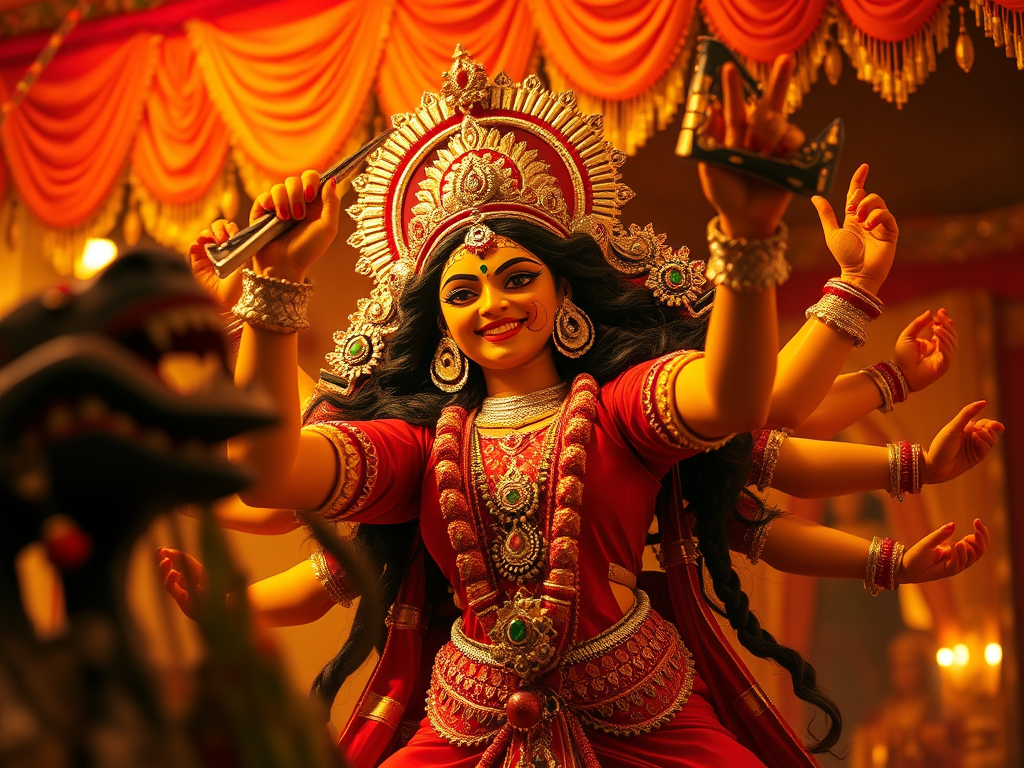
- Vijaya Dashami: The festival is also known as Vijaya Dashami. It means “Victory on the Tenth Day.” This marks the triumph of Goddess Durga over the demon Mahishasura in Hindu mythology.
- End of Navaratri: Dussehra concludes the nine-day Sharada Navaratri festival. It is a time of devotion and reflection.
- Dual Symbolism: Dussehra represents Lord Rama’s victory over Ravana and Durga’s triumph over Mahishasura, reflecting regional traditions.
- Good over Evil: The festival provides a reminder. No matter how powerful evil may seem, truth, justice, and moral strength will ultimately defeat it.
- Celebrations in North India: The festival features large celebrations, including Ram Lila, a play about Lord Rama’s life.
- Festive Processions and Rituals: On Dussehra, effigies of evil characters like Ravana, Meghnada, and Kumbhkarana are filled with firecrackers and burned. This symbolizes the defeat of evil and the triumph of good.
- Temple Decorations and Elders’ Visits: Light displays at temples and visits from elders for blessings are common traditions during the festival.
- Dietary Restrictions: Many Hindu practitioners follow a vegetarian diet during the festival, abstaining from meat, fish, and eggs.
- Start of Diwali Preparations: Dussehra also marks the beginning of preparations for Diwali, the festival of lights, which is celebrated 20 days after Dussehra.

Goddess Durga defeating demon Mahishasura
A depiction of Ram Lila.


Burning of effigies of Ravana, Meghnada, and Kumbhkarana.
Hope you liked these interesting facts about Dusshera, a major festival in Indian culture that represents the victory of good over evil. Dusshera also signifies overcoming attachment to our 10 senses, showing how they can help or mislead us.
The 5 senses help us perceive the world, known as Gyanendriya, which includes ears, skin, eyes, tongue, and nose. The other 5 senses relate to action, called Karmendriya, which includes the mouth (with the double function of speaking and eating), the hands, the legs, the genitalia and the rectum.
The senses can mislead us and distract us from spiritual growth, so it’s important to control them to follow a higher spiritual path.
By controlling and balancing your 10 senses, you can achieve true victory over evil, leading to greater self-awareness and personal growth.
Stay Connected with “Philotreat“
Have you checked our other platforms?
Thank you for being with us. Text us straight on any queries and we would be happy to help you out!


Drop your thoughts below!