
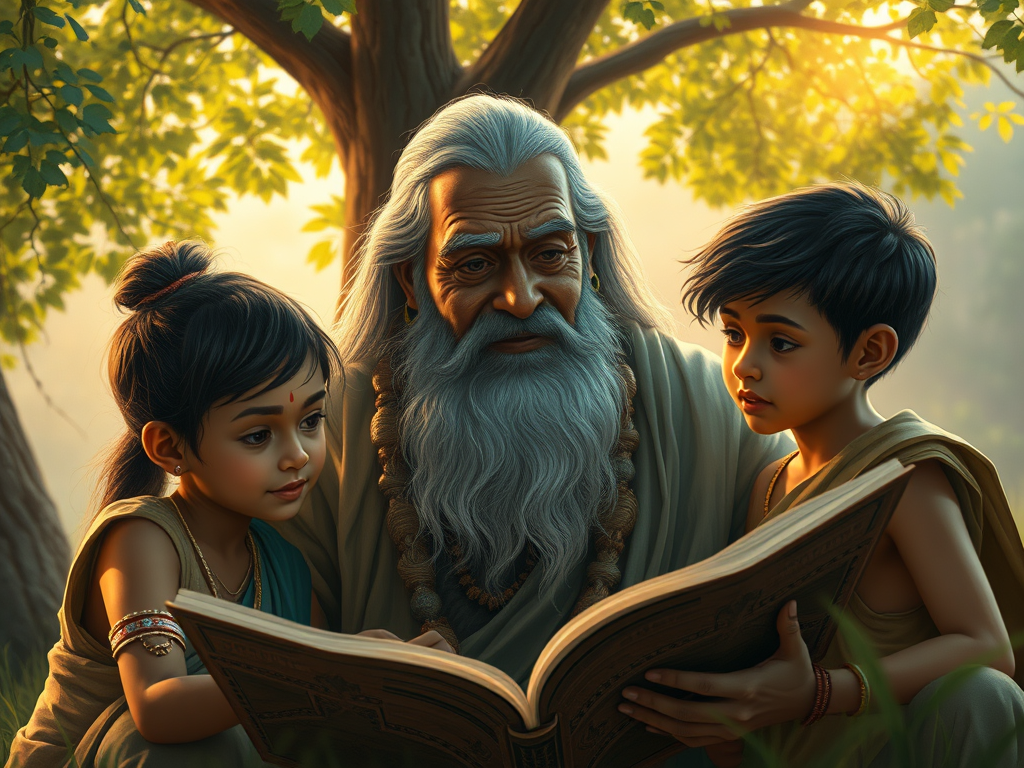
People often hesitate when it comes to teaching moral lessons to children. It is not so easy to teach them about morality and moral laws. They come up with a lot of questions, and to answer them you need examples. As it is very popularly said, we should teach others by precept and example. We must create clear perspectives or mental concepts. We also need to define examples well to help others learn important moral lessons.
The best sources from which we can make others learn are our ancient epics—the Ramayana and Mahabharata. Here we can find many character analyses and examples that help children understand the moral lessons well. Not just for children; even adults can learn greatly from the life lessons provided in ancient epics.
In this article, we will explore 8 important life lessons from the Ramayana. These lessons offer glimpses of how to live a meaningful life.
- Respect elders and be duty bound to parents. Kaikeyi wanted her own son to ascend the throne. Driven by this desire, she demanded that Rama (lead character in Ramayana) go for 14 years of exile. He listened dutifully to the wishes of his elders. He went for exile, showcasing his love and commitment to family values. This demonstrated the importance of adhering to parental guidance, even in the face of personal sacrifice.
- Stay united with siblings. Always stay close to elders. In the toughest and most challenging times, siblings truly help and support each other. Bharat has rejected the throne and the title of king. He waited faithfully for Rama for 14 long years. This demonstrates the strength of family bonds and loyalty. This act reflects the profound values of love and patience that define our relationships with those we hold dear.
- Be dutifully committed to elders – the duty of Raja is that his citizens should be happy and content. Rama sacrificed everything and left for exile, showcasing his love and commitment to this principle. He also left Sita behind. Everyone started talking bad about their relationship. This highlighted the immense pressures he faced as a leader. In doing so, he sacrificed his comfort and happiness, demonstrating the significant personal cost of upholding dharma. He sacrificed a lot, embodying the ideal of selflessness that is expected from a true leader.
- Choose the path of righteousness. Rama has always chosen the path of righteousness. He never tried to betray and hurt others by unfair means. He always showed honesty and justice in his conduct. It guides those who aspire to lead a life driven by moral values. Throughout his journey, he has faced numerous challenges. Temptations could have diverted him from his ethical path. Yet, he stood firm. Rama treats others with respect and compassion. He not only upholds his own integrity but also inspires those around him to accept similar virtues.
- Remain humble no matter how powerful you are. Sri Hanuman, the epitome of strength and devotion, could have easily brought Sita back on his own. He had extraordinary powers. However, he was so fiercely loyal to prince Rama that he honored his word and served him faithfully. In doing so, he not only demonstrated his constant dedication but also the value of humility. He did not act independently. He surrendered himself completely to Rama’s wishes. His actions illustrated the importance of serving something greater than oneself.
- Rama never considered anyone inferior. He took the help of the monkey army, a formidable and loyal group of warriors. They helped him cross the vast ocean in his quest to reach Lanka. With each swing of their powerful tails, the monkey army exemplified bravery. Each leap showed their camaraderie. They proved that unity in purpose could achieve the impossible. They faced daunting obstacles together. Rama’s noble mission to rescue Sita drove them. This showcases that true strength lies in collaboration. It also lies in mutual respect among allies.
- Abandon the following. These are the six enemies of the mind: kama (Desire/Lust), krodha (Anger), lobha (Greed), mada (Ego), moha (Attachment), matsarya (Jealousy). And, abandon alasya (laziness). These all could take human peace of mind and spoil relations.
- Embrace everyone irrespective of class, color, or creed. This is a powerful and timeless lesson. It is illustrated beautifully in the story of Prince Rama. In his journey, he tasted the fruit that was already tasted by Sabri—a poor old woman with little to offer. Her humble existence teaches us something great. True worth and dignity are not determined by material possessions. They are also not determined by social status. Instead, it is the purity of the heart and the authenticity of one’s intentions that hold the greatest value.
These lessons are invaluable sources of wisdom. They guide anyone seeking a straightforward path to understanding morality. They also reveal the essence of virtues. They inspire individuals to remain focused and deal with the challenges of modern life with clarity. By following these teachings, we are empowered to make positive decisions and thrive in our society.
For more such interesting posts, read our latest contributions.
- Ancient Indian Wisdom for a Just and Compassionate Society
- THE SPIRITUAL KITCHEN
- Beyond Entertainment: The Forgotten Depth of Ahimsa
- Ākāśa, Lokākāśa and Alokākāśa: Space in Jain Philosophy
- Guru Nanak’s Philosophy: Ethical, Social, and Spiritual Foundations of Sikh Thought


Drop your thoughts below!