
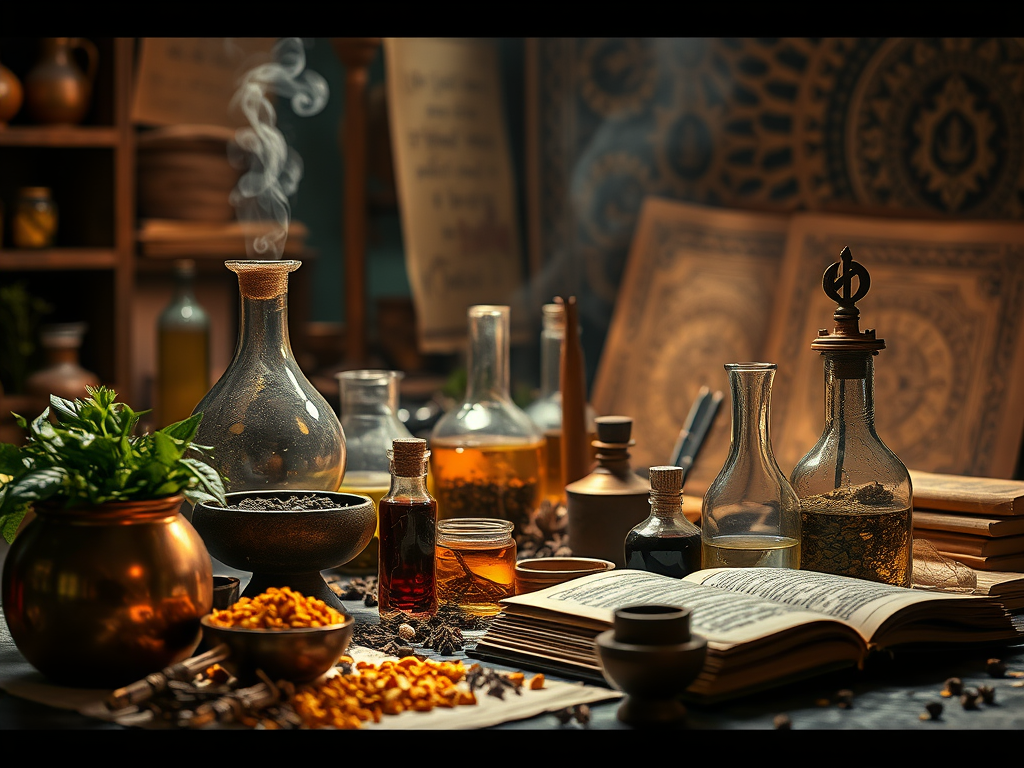
When we think of chemistry, our minds often go to laboratories filled with beakers, acids, equations, and modern technology. But centuries before the birth of modern science, India was already home to a rich tradition of chemical knowledge. Ancient Indian chemistry, often referred to as “Rasayanashastra”, was not just about transforming substances; it was about transforming life itself.
🔬 Rasayana – The Science of Transformation
The Sanskrit word Rasa means essence or elixir, and Rasayana refers to the science of preserving and rejuvenating life. Rasayana was a core part of Ayurveda, the Indian system of medicine. It focused on maintaining youth, boosting immunity, and achieving longevity—goals that modern medicine is still trying to fully master.
But Rasayana wasn’t limited to medicine. It included alchemy, metallurgy, perfumery, dyeing, and even the preparation of advanced alloys and acids. The aim wasn’t always to turn metals into gold (as in Western alchemy), but to purify, enhance, and spiritualize both matter and the self.
🧪 Indian Alchemists – The Forgotten Scientists
India had many brilliant chemists and alchemists who were centuries ahead of their time:
- Nagarjuna (circa 8th century CE), a Buddhist alchemist, authored Rasaratnakara and worked on transforming base metals into gold. He also wrote about medicines, chemical processes, and the preparation of mercury compounds.
- Acharya Charaka and Sushruta, the legendary physicians, described chemical methods for drug preparation, fermentation, distillation, and purification in their medical treatises.
- Varahamihira discussed chemicals in the context of astrology and gemology.
🧭 Key Contributions of Ancient Indian Chemistry
- Metallurgy:
- The famous Iron Pillar of Delhi, standing rust-free for over 1600 years, is a marvel of ancient metallurgy.
- Advanced techniques for smelting gold, silver, copper, and zinc were practiced, including alloy-making (e.g., panchaloha – five-metal alloy).
- Alchemy and Medicine:
- Preparation of mercurial medicines (known as Parada yoga).
- Use of sulphur, arsenic, and minerals in controlled forms to treat diseases.
- Perfumery and Cosmetics:
- Use of natural ingredients like sandalwood, turmeric, rose, and camphor in perfumes and skincare.
- Dyes and Colors:
- Knowledge of natural dyes like indigo, turmeric, and madder for textiles.
- Use of minerals to create durable wall paintings (e.g., in Ajanta caves).
- Distillation and Fermentation:
- Early techniques for distilling alcohol and essential oils.
- Fermented products used in cooking and medicine.
- Glass and Ceramics:
- Indian craftsmen knew the art of glass-making and glazing ceramics well before the 1st millennium CE.
🧘🏽♀️ Chemistry as a Spiritual Path
One of the most fascinating aspects of ancient Indian chemistry was its philosophical dimension. The transformation of matter was often seen as a metaphor for inner transformation. Alchemical practices were used by Tantric yogis to purify the body and awaken consciousness. They believed that just as base metals could be purified and elevated, so could the human soul.
This approach blended science, art, medicine, and spirituality—making Indian chemistry not just functional, but meaningful too.
📚 Why It Matters Today
Ancient Indian chemistry offers:
- Sustainable production and purification methods.
- Ethical insights on how science serves humanity.
- Knowledge is about balance, not just control.
🔗 Final Thoughts
Ancient Indian chemistry is not just a subject to be remembered in textbooks—it is a heritage of knowledge and consciousness. From metallurgy to medicine, from cosmetics to consciousness, our ancestors laid a foundation of holistic science that still has much to teach us.
As modern scientists explore green chemistry, integrative medicine, and sustainable technology, looking back at our ancient roots might just light the way forward.
Let us not forget—India’s past was not just spiritual, but also scientifically rich, waiting to be rediscovered and reimagined for the future.
📝 Keep exploring. Keep questioning. Keep transforming.
For more philosophical insights and ancient wisdom, subscribe to out channel.
Also check out my YouTube channel Philotreat for engaging videos on philosophy, life, and personal growth.
Watch this video to know more about ancient Indian Chemistry.


Drop your thoughts below!