
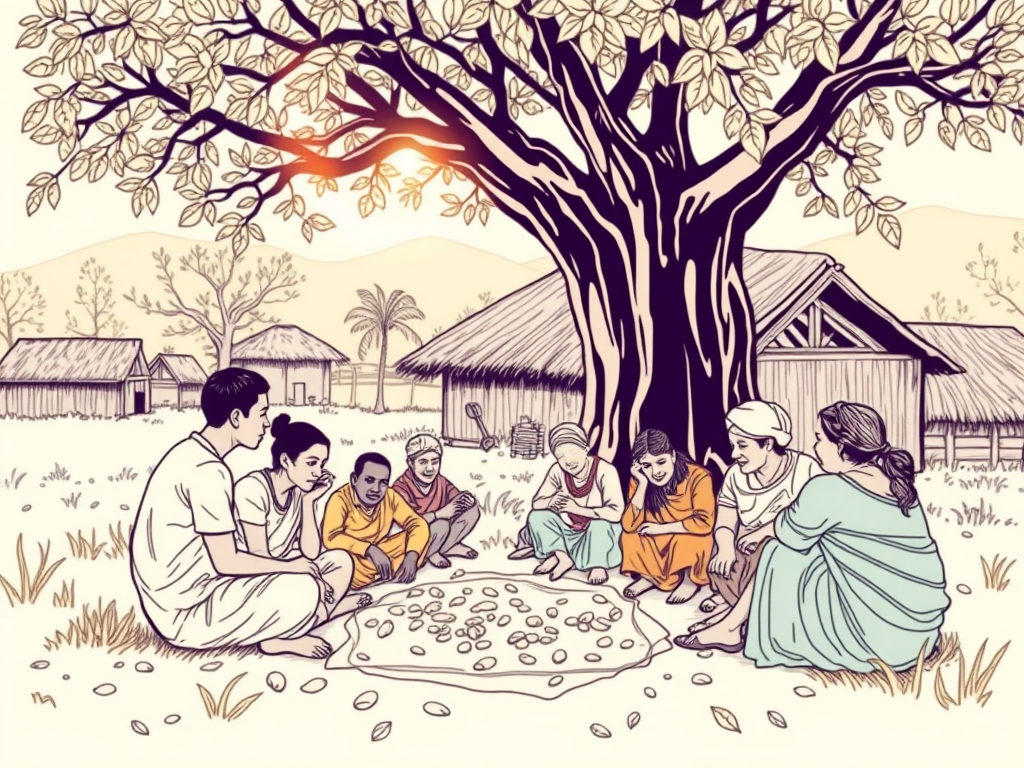
When you walk into a rural village, do you observe or do you connect?
That’s the heart of PRA—Participatory Rural Appraisal. It’s not about being an expert. It’s about learning with people, not about them. And guess what? You don’t need a development degree to get started.
Whether you’re a student, volunteer, teacher, or simply curious about grassroots life, you can confidently use PRA to engage with communities and help them reflect, analyze, and act.
What is PRA in Simple Words?
PRA is a set of tools that help communities reflect on their own lives—what’s working, what’s not, and what they want to change.
Think of PRA like a mirror: people look at their lives, patterns, priorities, and decide what matters most.
And your role? Not to teach. Just to listen, observe, and facilitate.
4 PRA Principles for Everyone
Before you begin, remember these four PRA mantras:
- Hand over the stick: Let the community lead the process.
- Respect local knowledge: People are the experts of their own lives.
- Facilitate, don’t dominate: Your job is to encourage voices, not instruct them.
- Triangulate: Always cross-check what you learn from multiple sources.
PRA in Action: Step-by-Step for Laypersons
1. Start with Participation, Not a Questionnaire
Don’t walk in with forms. Instead, call for a casual group meeting—under a tree, outside someone’s home, or at a local event.
🟢 Ask something simple like:
“Can you all show me where the water sources are?”
Let them draw a social map using powders, stones, leaves, or chalk. You’ll see their enthusiasm unfold!
2. Walk the Village: The Transect Walk
Go on a walk with a few local people—farmers, women, youth.
Ask as you walk:
- What crops grow here?
- Who owns the land?
- Is flooding a problem here?
- Where do children go to school?
📓 Tip: Sketch a rough map, note interesting observations, mark areas of concern or strength.
3. Get Numbers Creatively: Use Grains, Not Graphs
Instead of surveys, try matrix ranking.
Ask:
- Which crop gives you more income?
- Which one needs more water?
Let them use pebbles, grains, or seeds to show quantity. This makes data visual, fun, and accurate.
Example:
| Crop | Profit (Grains) | Water Needed (Pebbles) |
|---|---|---|
| Paddy | 5 | 10 |
| Millets | 7 | 4 |
| Sugarcane | 9 | 12 |
4. Map Social Realities: Who’s Affected & How
Help the group reflect using PRA tools like:
- Seasonal calendars (to see when crises peak)
- Venn diagrams (to identify which institutions help or hinder)
- Time lines (to trace village history or problems)
Ask open questions:
- Are some households poorer than others?
- Are youths migrating? Why?
- Are women overburdened in specific months?
5. Move to Impact: Enable Action
The point of PRA is not just knowing—it’s doing.
Ask:
- What do you want to change?
- Who can help?
- Can we form a local team for this?
Let them draft a small action plan. Your job: support and document it.
Real-World PRA Magic
In a Nashik village, a seasonal calendar made by women farmers revealed they were busiest during the monsoon—and often skipped maternal check-ups.
This simple PRA insight led to rescheduling PHC visits—a tiny change that saved lives. That’s the power of community-led reflection.
You Can Do PRA Too!
You don’t need to be a “rural expert.” You just need:
- A field diary
- Colored chalks or powders
- Grains or stones for activity
- A respectful attitude
- Curiosity, not judgment
Instead of asking, “How can I fix this?” — ask, “What do you think should happen next?”
Because the real development starts when people believe their voices matter.
Your PRA Kit (Pocket Edition)
✅ Diary or notebook
✅ Colored powders, chalks, or paper
✅ Grains, seeds, or buttons for ranking
✅ Patience and a humble attitude
✅ Listening ears
Final Thought
So next time you walk into a village, remember:
Don’t instruct—facilitate.
Don’t assume—ask.
Don’t dominate—co-create.
PRA is not just a toolkit. It’s a mindset.
Let it guide you toward confidence, connection, and community-led change.


Drop your thoughts below!